Scratch Dent Review for Budget Car Buyers

A dented fender or scratched door should not decide whether you can get to work, pick up the kids, or handle the week ahead. This scratch dent review is for practical buyers who care more about a vehicle starting, stopping, and getting them where they need to go than looking perfect in a parking lot.
For many Florida drivers, a scratch-and-dent vehicle can be the smarter buy. Cosmetic flaws often bring the price down without changing the basic job of the car. The key is knowing the difference between a harmless scuff and damage that deserves a closer look.
What Does Scratch and Dent Really Mean?
A scratch-and-dent car has visible cosmetic wear. That could mean faded paint, a bumper scrape, a ding in a door, a cracked piece of trim, or small dents from parking lots and everyday use. These are common on repossessed, impounded, and pre-owned vehicles, especially cars that were used as real transportation instead of garage-kept weekend toys.
Cosmetic damage is not automatically a problem. In fact, it can be the reason a buyer finds a lower-priced vehicle that still has useful life left. A car with a few scratches may cost far less than a cleaner-looking version of the same model, leaving more room in your budget for insurance, fuel, maintenance, and everyday expenses.
But “scratch and dent” should never mean “ignore everything.” The exterior is only one part of the picture. A smart buyer looks at how the vehicle drives, how it has been cared for, and whether the price makes sense for its condition.
Scratch Dent Review: When It Is a Good Deal
A scratch-and-dent vehicle is usually a good deal when the damage is clearly cosmetic and the price reflects it. A scuffed bumper, chipped paint, or shallow door dent may not affect safety, reliability, or your ability to drive every day. If the engine runs well, the transmission shifts properly, the brakes feel right, and the tires have usable tread, a few exterior flaws may be easy to live with.
Think about your real priorities. If you need dependable transportation to commute around Palmetto, Bradenton, Sarasota, or Manatee County, showroom paint may not be at the top of the list. A lower purchase price can matter much more than a spotless hood.
A scratch-and-dent vehicle can also make sense for a first-time driver, a work vehicle, a second family car, or someone rebuilding financially. You are less likely to worry about every grocery-store parking lot ding when the car already has a little character.
The trade-off is resale value. Cosmetic damage can make a vehicle worth less later, even if it runs well. That matters less if you plan to drive the vehicle for several years and get real use out of it. It matters more if you expect to trade it in soon or want a vehicle that looks nearly new.
What to Check Before You Buy
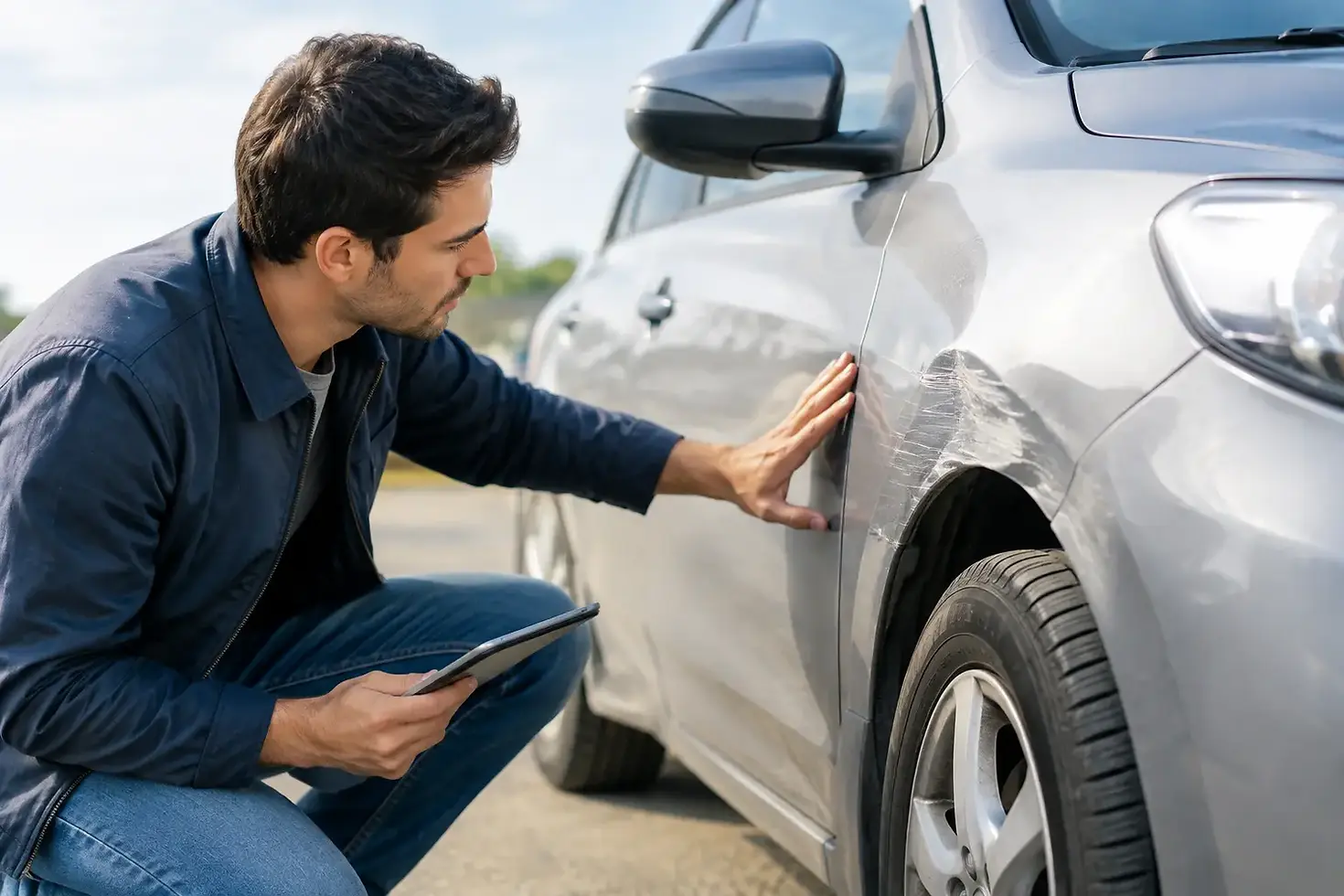
Start with the damage itself. Stand back from the vehicle, then look closely at each scratch or dent. Small surface scratches and minor dings are usually just that. Deeper damage needs more attention, especially if it is near the hood, trunk, doors, headlights, taillights, wheel wells, or underneath the vehicle.
Look for signs that a dent may be more than cosmetic. A door that does not open or close smoothly, a hood that sits unevenly, a cracked light, loose bumper pieces, or sharp exposed metal can point to a repair need. Rust is another concern in any vehicle. Florida’s sun, rain, and coastal air can be tough on paint and metal over time.
Then focus on what matters most: how the vehicle operates. Take a test drive if available. Listen for unusual knocking, squealing, grinding, or rattling. Check that the steering feels controlled, the brakes respond normally, the air conditioning blows cold, and the dashboard does not show warning lights that have been ignored.
You should also check the tires, fluid levels, lights, seat belts, windows, and locks. No used vehicle is perfect, particularly at an entry-level price. The goal is not to find a flawless car. The goal is to understand the condition honestly and make sure the vehicle fits your needs and budget.
Ask Straight Questions
A low-pressure dealership should be able to discuss a vehicle’s visible condition without making it complicated. Ask what is known about the cosmetic damage, whether any repairs have been made, and whether there are issues that affect normal driving. If something concerns you, say so.
You can also ask whether the vehicle has been inspected and what paperwork is available. A clear answer is worth more than a polished sales pitch. The best deal is one where you know what you are buying and what you can reasonably expect after you drive away.
Why Cosmetic Damage Can Lower the Price
Traditional dealerships often spend money making used cars look as close to new as possible. Paint touch-ups, dent repair, detailing, wheel refinishing, and other appearance work can add cost. That cost usually gets passed along to the buyer.
Scratch-and-dent inventory takes a different approach. Instead of making every vehicle look fancy, the focus can stay on making transportation affordable. Buyers who do not need perfect paint may get a better entry price because they are willing to accept normal wear.
That is especially useful when cash is tight. A lower sticker price can reduce the down payment needed and make weekly payments more manageable. It can also help buyers avoid stretching their budget for a car that looks better but does not get them anywhere more reliably.
At Toad Cars, the point is simple: a few scratches should not keep you from owning a vehicle. Cheap wheels can still be the right wheels when the price is fair and the vehicle meets your day-to-day needs.
Do Not Let a Low Price Rush Your Decision
A bargain is only a bargain if you can afford the full picture. Before buying, think beyond the vehicle price. You will still need fuel, insurance, registration, regular oil changes, and repairs that can come with any used car. Set aside a little room in your budget when possible.
Also, be honest about the kind of vehicle you need. A compact car may be a great low-cost commuter, but it may not work for a large family or a job that requires hauling equipment. A truck with a dented bed may be perfect for work, while a dented sedan may be better for getting to and from town cheaply.
If financing is part of the plan, ask for the terms in plain language. Know the down payment, payment amount, payment schedule, and any expectations for insurance. Buy Here Pay Here financing can be a helpful option for buyers with no credit, bad credit, or limited credit history, but the payment needs to fit your weekly budget comfortably.
The Bottom Line for Practical Buyers
A scratch-and-dent car is not for someone who wants a flawless driveway photo. It is for the buyer who sees transportation as a tool: get to work, handle appointments, pick up groceries, and keep life moving. Visible wear can be an honest trade for a lower price, particularly when the mechanical condition checks out.
Do your walk-around, ask clear questions, and pay attention during the test drive. If the vehicle fits your needs, the payments work for your budget, and the flaws are mostly cosmetic, a scratch or dent may be the detail that helps you drive today without paying for perfection.


Comments