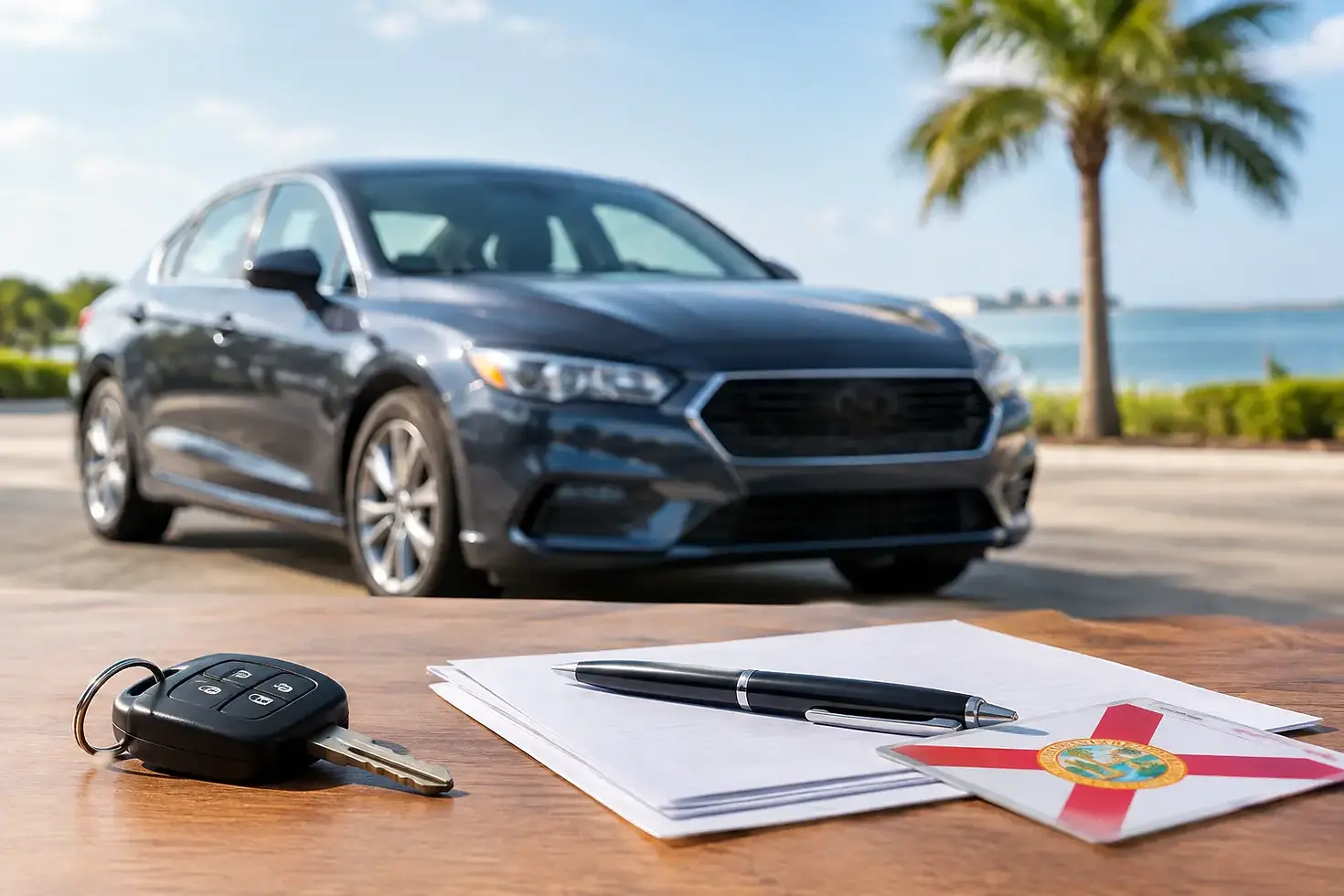
Florida Registration Guide for Your Used Car

A cheap car is only a good deal if you can get it legally on the road. This Florida registration guide breaks down what happens after you buy a used vehicle, what paperwork to keep handy, and how to avoid a last-minute surprise at the tag office.
For drivers around Palmetto, Bradenton, Sarasota, and the Gulf Coast, the goal is simple: buy affordable transportation, get insured, get registered, and get back to work, school, appointments, and family responsibilities. The process is manageable when you know which documents matter.
What Florida Vehicle Registration Means
Florida registration connects a vehicle to its legal owner and allows it to be driven on public roads. Your registration record includes the vehicle information, license plate number, and expiration date. Most passenger vehicle registrations are renewed annually, although some owners may qualify for longer renewal periods.
Registration is not the same as a title. The title proves ownership. Registration gives the vehicle permission to operate on Florida roads. When you buy a used car, both items need attention, even if the dealer helps handle part of the process.
Florida also requires active proof of insurance before a vehicle can be registered. If your insurance lapses, you could face a registration suspension, reinstatement fees, and a lot of hassle you did not need.
Florida Registration Guide: What You Need After Buying
The exact paperwork depends on whether you buy from a licensed dealer or a private seller. Buying from a dealer is often easier because the dealership can prepare the title and registration paperwork, collect required taxes and fees, and issue a temporary tag when appropriate.
If you buy from a private party, you will generally need the properly completed title, proof of Florida insurance, a valid photo ID, and payment for registration-related fees. The seller should sign the title where required, and you should make sure the vehicle identification number on the title matches the VIN on the car or truck.
Do not hand over your money until you have checked that VIN. Look through the windshield on the driver’s side, then compare it carefully with the title. A mismatch is a stop sign, not a small detail to fix later.
When you buy from a dealership such as Toad Cars, ask before signing how the registration process will be handled. A clear answer should tell you whether the dealer will submit the paperwork, provide a temporary tag, transfer your existing plate, or give you documents to take to your local tax collector office.
Bring Proof of Florida Insurance
Florida requires personal injury protection and property damage liability coverage for registered vehicles. Your insurance company can provide a policy card or other proof of coverage. Make sure the VIN on your insurance paperwork matches the vehicle you are registering.
It is smart to arrange insurance before you pick up the vehicle. That way, you are not sitting in a parking lot trying to buy a policy on your phone while a temporary tag deadline gets closer.
Have Your Identification Ready
A current Florida driver license is the easiest form of identification for most buyers. If you are new to Florida or do not have a Florida license yet, ask the tax collector office what identification and residency documents it will accept for your situation.
Names should match across your ID, insurance, and purchase documents. If you recently changed your name or address, bring supporting documents so a minor mismatch does not slow down the transaction.
Title Transfer and Registration Fees
Florida charges fees for title work, registration, license plates, and sometimes other services. The total is not one flat number for every buyer. It can change based on whether you already have a Florida plate to transfer, whether the car needs a new plate, the vehicle type, and county-level charges.
Sales tax may also apply to the purchase. A licensed dealer normally calculates the taxes and fees as part of the purchase paperwork. With a private-party sale, you may pay applicable taxes and fees when you transfer the title and register the vehicle.
The best move is to ask for an itemized out-the-door number before you commit. A low vehicle price matters, but so does knowing the full amount needed to drive away legally. If money is tight, do not assume the advertised price includes tag, title, tax, or insurance.
Transferring a Current Florida Plate
If you already have a Florida license plate registered in your name, you may be able to transfer it to your newly purchased vehicle. Plate transfers can save money compared with getting a brand-new plate, but eligibility depends on the registration status and ownership details.
Tell the dealer early if you want to transfer your plate. Bring your current registration if you have it. If the plate is expired, surrendered, registered to someone else, or connected to a vehicle you no longer own, the process may be different.
Never put an old plate on a newly purchased car just because it fits. Plate transfers must be completed properly. Driving with the wrong plate can create a problem that costs more than doing it right from the start.
Temporary Tags: Know the Expiration Date
A temporary tag gives you limited time to legally operate the vehicle while permanent registration is being completed. Look at the expiration date as soon as you receive it. Put a reminder in your phone several days before it expires.
Do not treat a temporary tag like a permanent solution. If paperwork is still pending near the expiration date, contact the dealer or tax collector office right away. Waiting until the tag has expired can leave you without legal transportation when you need it most.
Keep your purchase documents, temporary registration, and proof of insurance in the vehicle or somewhere you can easily access them. If you are pulled over, being organized helps show that you are actively completing the process.
Buying From a Private Seller? Slow Down
Private-party vehicles can look like a bargain, especially when you need cheap wheels fast. But the buyer takes on more responsibility for checking the paperwork. A seller who says the title will be sent later, cannot find the title, or wants you to sign a blank document is asking you to take a serious risk.
Before paying, make sure the seller named on the title is the person selling the vehicle, the title does not show an unresolved lien, and the odometer disclosure is completed when required. If there is a lienholder listed, get clear proof that the lien has been satisfied before you move forward.
A low price cannot fix a title problem. You may end up with a car you cannot register, insure, sell, or drive legally. For buyers focused on dependable, low-cost transportation, clean paperwork is part of the deal.
Keep Registration From Becoming a Yearly Headache
Once your vehicle is registered, mark the renewal date. Florida may send a renewal notice, but it is still your responsibility to renew on time. You may have options to renew online, by mail, or in person, depending on your situation.
Keep your mailing address current with the state. Renewal notices and important registration information cannot help if they go to an old apartment or a previous address. Also keep your insurance active and update your insurer quickly if you move or change vehicles.
If you are buying on a tight budget, build registration renewal and insurance into your monthly plan. The payment may be smaller than a repair bill or a down payment, but missing it can still take your car off the road.
A Better Way to Start Driving
Affordable transportation should not come with confusing paperwork or surprise costs. Ask direct questions before you buy: What is the out-the-door price? Is a temporary tag included? Who handles the title transfer? Can I transfer my current plate? What will I need to bring?
A good seller will answer plainly. Get your insurance lined up, keep every signed document, and take care of registration before the temporary tag runs out. Then your used car can do what you bought it to do: get you where you need to go without draining your budget.


Comments