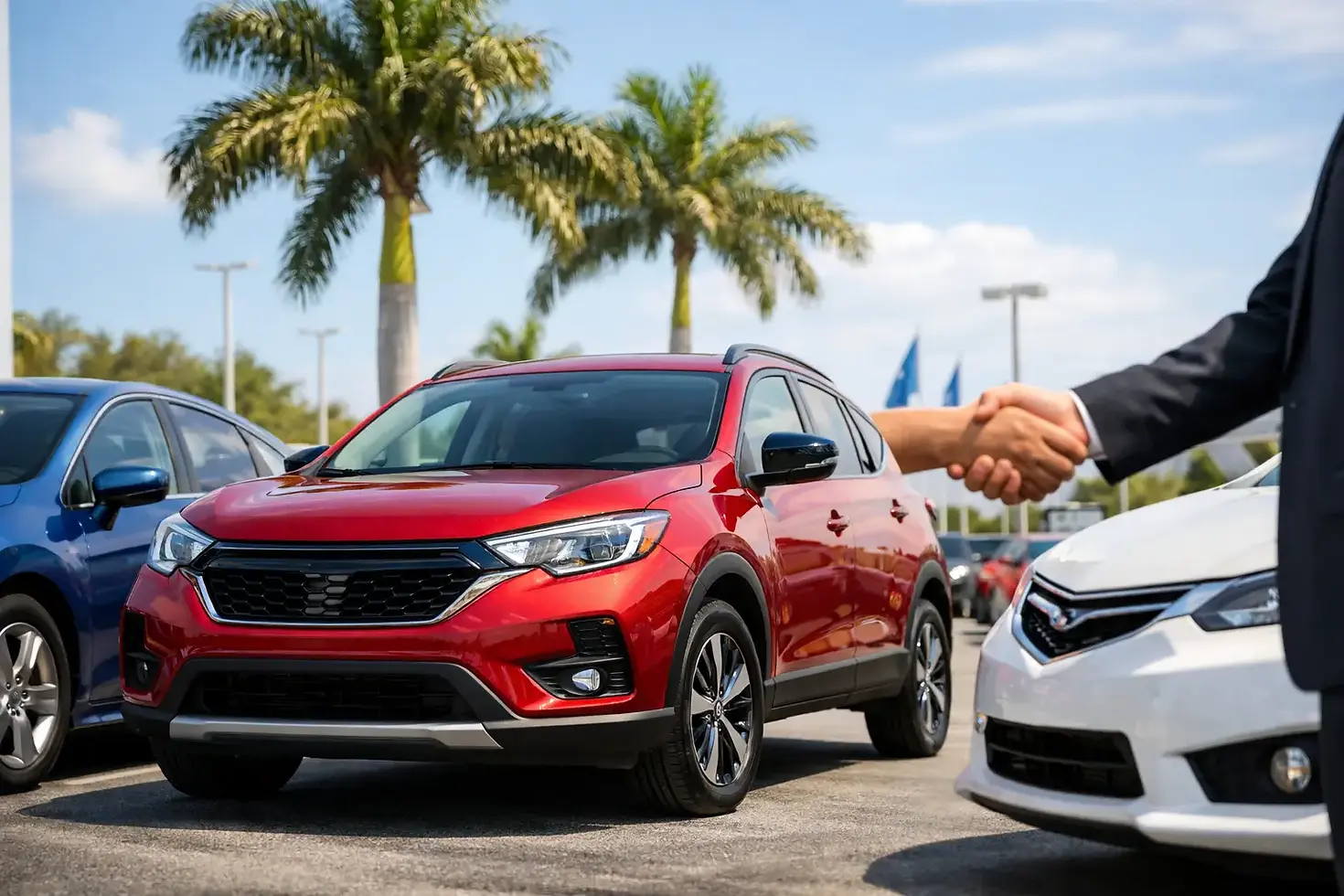
Best Cars for Weekly Payments in Florida

When you need a car fast, the question usually is not which model has the biggest touchscreen or the fanciest trim. It is which of the best cars for weekly payments will get you to work, pick up the kids, and keep your budget from getting crushed every Friday. That is a different kind of car shopping, and honestly, it is the one most real people care about.
If you are buying on weekly payments, the right car is usually not the newest or flashiest one on the lot. The right car is the one that gives you a lower total amount financed, reasonable repair costs, decent gas mileage, and a good shot at dependable daily driving. A few scratches and dents do not matter much when the payment works and the car does its job.
What makes the best cars for weekly payments?
A car can look cheap up front and still cost you too much every week. That is why the best cars for weekly payments usually share a few traits. They tend to have a lower purchase price, parts that are easy to find, and a reputation for holding up under everyday use.
Smaller sedans are often strong choices because they hit that sweet spot between affordability and practicality. They are usually less expensive than SUVs and trucks, easier on gas, and simpler to maintain. That matters when every dollar in your paycheck already has a job.
Age matters too, but not in the way some buyers think. A 10-year-old vehicle with a solid maintenance history can be a much better weekly-payment car than a newer model loaded with features you do not need. The goal is not to impress anybody in the parking lot. The goal is to own transportation you can actually afford.
Sedans usually win on weekly affordability
If your main concern is keeping payments as low as possible, start with compact and midsize sedans. Cars like the Toyota Corolla, Honda Civic, Hyundai Elantra, Nissan Sentra, and Ford Focus often make sense for budget-conscious buyers because they are common, practical, and generally less expensive than larger vehicles.
The Corolla and Civic have earned their reputation for a reason. They are known for lasting a long time when maintained properly, and that can make them attractive for buyers who want less drama after they drive off. The trade-off is that they sometimes hold their value better than other models, so the sticker price may not always be the absolute lowest.
That is where cars like the Elantra, Sentra, or Chevrolet Cruze can come into the conversation. They may offer a lower purchase price, which can help create a lower weekly payment. For some buyers, that lower starting price matters more than long-term resale value. If you need a car now and need the payment to fit now, that is a fair way to shop.
Small SUVs can work, but they cost more
A lot of people want an SUV because it feels safer, gives more cargo room, and makes family life easier. That is understandable. But if you are focused on weekly payments, you should know that SUVs usually cost more to buy and often more to fuel.
That does not mean they are off the table. Smaller SUVs like the Ford Escape, Hyundai Tucson, Honda CR-V, and Chevrolet Equinox can still be decent options if you need the space. You just have to be realistic about the payment difference compared with a sedan.
If your budget is already tight, choosing an SUV because you like sitting higher off the road may not be the best financial move. If you truly need the room for car seats, work gear, or a growing family, it can be worth it. This is one of those cases where it depends on how you use the vehicle every day.
Trucks are useful, but not always payment-friendly
Pickup trucks are popular for a reason. They are useful for work, hauling, side jobs, and home projects. In Florida, plenty of drivers would love to have one. But trucks are rarely the easiest vehicles to fit into a weekly budget.
Even older trucks often carry higher prices than older cars. They also tend to use more gas, and some parts and tires can cost more too. If you need a truck to make money, that can justify the added cost. If you just want one because it is nice to have, it may be smarter to stick with a sedan or compact SUV and keep the payment lower.
That is not flashy advice, but it is honest advice. The best vehicle is the one that helps your life, not the one that makes your budget harder every single week.
Used cars with simple features are often the smartest buy
When shoppers hear "best car," they sometimes think more features means more value. For weekly payments, that is usually backwards. Extra features often raise the price without helping you get to work any better.
A basic used car with cold air, solid brakes, decent tires, and a clean-running engine can be a stronger choice than a newer model packed with electronics. Touchscreens, premium wheels, sunroofs, and luxury trim packages may be nice, but they do not lower your payment.
In fact, simpler vehicles can be easier to live with. There is less to break, and repairs can be less painful. For value-driven buyers, that is a big deal. Dependable beats fancy every time when money is tight.
The down payment matters almost as much as the car
A lot of buyers focus only on the vehicle itself, but weekly payments are also shaped by how much money you put down. A lower-priced car with a small down payment can still end up stretching your budget if the financed amount stays too high.
If you can put a little more down, it may open up better options or bring the weekly payment into a safer range. If you cannot, then the smarter move is to choose a more affordable vehicle rather than forcing yourself into a payment that feels uncomfortable from day one.
This is where buy here pay here financing can help practical buyers. Instead of getting stuck in the usual back-and-forth with banks and credit checks, many shoppers can focus on a simpler question: what car can I afford each week without falling behind? That is a much more useful question than chasing a vehicle that looks better on paper.
How to shop for the best cars for weekly payments
Start with your real weekly budget, not your dream car. Think about what you can comfortably pay after rent, groceries, insurance, gas, and everything else. Leave yourself breathing room. A car payment that barely works on a good week is not a good payment.
Then look at total ownership costs. Gas mileage matters. Insurance matters. Tire prices matter. Repair history matters. A cheap vehicle that burns gas fast or needs constant work can hurt more than a slightly higher-priced car with a better track record.
It also helps to stay flexible about make, model, and appearance. If you are open to a few cosmetic flaws, older body styles, or higher mileage with the right condition, you can often find better value. That is one reason budget dealerships that specialize in practical transportation can be such a strong option. You are paying for a vehicle, not a showroom image.
Good choices for different kinds of drivers
If you have a longer commute, a compact sedan usually makes the most sense because fuel economy becomes a bigger deal every single week. If you are driving kids around town and need a little more room, a midsize sedan or smaller SUV may be worth the extra cost. If you use your vehicle for work equipment or side jobs, then a truck or van could still be the right move, but only if that utility offsets the added expense.
For many buyers around Palmetto, Bradenton, and nearby areas, the sweet spot is a clean, affordable used sedan with manageable mileage and simple financing. That is not glamorous, but it is exactly how people stay moving without wrecking their budget. At Toad Cars, that practical mindset is the whole point.
What to avoid when weekly payments are the priority
Try not to shop emotionally. That sounds simple, but it gets people all the time. A bigger engine, nicer wheels, or a newer body style can make a car feel like a better deal, even when the weekly number says otherwise.
Also be careful with vehicles that are cheap for a reason. Some cars have low prices because they are expensive to keep on the road. Others may have poor maintenance history or obvious signs of neglect. Low payment does not mean good value if the vehicle keeps ending up in the repair shop.
Ask the plain questions. Does it start right up? Does it idle smoothly? Do the brakes feel solid? Is the interior worn in a normal way, or does it suggest hard use? You do not need to be a mechanic to notice a lot.
The best car for weekly payments is usually the one that covers your basic needs, keeps your costs predictable, and lets you drive away without second-guessing your budget. If you stay focused on affordability over appearance, you will usually make a better choice and feel better about it every payday.


I’m very happy with my tax-free used vehicle purchase in Europe. I was looking for a reliable car that could comfortably handle my daily travel, and I found one that suited my needs perfectly. The vehicle was in great condition and offered much better value than I expected. It has been a pleasure to drive, and I’m completely satisfied with my purchase. https://patriot-autos.net/